Saturday, March 29, 2008

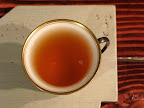
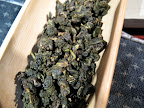
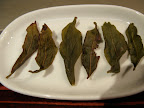
Dong Ding Gui Fei Mei Ren


Formosa Oolong
Formosa Oolong is a specific category of oolong also commonly known as “Oriental Beauty”, “Bai Hao Oolong”, “Silver Tipped Oolong”, “Dong Fang Mei Ren”, “Pong Hong Te” and now “Gui Fei Mei Ren”.

How does the Formosa Oolong group get their wonderful flavor? An interesting article in the Taiwanese magazine gives an account:

In the months of May through July tiny insects called leaf hoppers are at their highest concentration. During this time, tea farmers throughout Taiwan make preparations for their summer harvest of Formosa Oolongs. In the past, pesticides were used to discourage these little buggers, but in recent years the farmers have hoped that their crops are well attacked. It was discovered that the more highly concentrated the leaf hoppers, the more flavorful the tea.

The leaf hoppers became a welcome pest, adding flavor to the tea throughout the island. Through several hundred if not thousands of years of evolution, the fresh tea leaf has developed a self defense mechanism. The threat caused by the leaf hopper resulted in abnormal metabolic rhythms being produced by the plant which in turn caused some sort of chemical reaction that results in “multiple tea polyphenols” (the powerful antioxidant found in oolong tea) and tea tannins. These polyphenols and tannins in turn attracted the leukoplakia wax spider, a natural predator of the leaf hopper. A full grown leaf hopper is no bigger than a fruit fly. It is as small as a spec of dust. They have a sharp beak poker mouth that resembles a shortened mosquito snout. The leaf hopper uses this poker to suck out the nutrient juices of the fresh and tender leaves of the camellia sinensis, or tea plant. The leaf hopper threatens the sprout of the fresh leaf which looks like a toothpick. In a controlled experiment, researchers found that when artificially replicating the attack of the leaf hopper in a lab, the tea plant responded similarly, producing the same abnormal metabolic rhythms. But the degree to which the chemical reaction occurred was far less. When researchers tasted both teas the results showed clearly that the tea bitten by the leaf hopper was significantly sweeter than the tea that was artificially attacked. The conclusion of the research was that the classic honey taste associated with Formosa Oolong comes from the leaf hopper actually sucking from the tea sprout.

How did Dong Ding Gui Fei “Leaf Hopper Oolong Tea” come to be? The story begins with an earthquake that occurred in September, 1999, in Nantou, Taiwan, ---7.6 on the Richter scale This earthquake is often referred to as 9-2-1. Nantou County is considered one of the safest natural environments. The island of Taiwan is riddled with earth quakes, but natural Utopias exist. Many moved to Nantou with the idea of being safe. It is an area much like Eugene, a great environment and very close to the mountains. Yet, the epicenter of the devastating earthquake of 9-2-1 was in Nantou. Needless to say, the land was greatly transformed. Many roads were destroyed. There was a period in which the tea fields were unattended to. During this lack of attention, leaf hoppers were abundant. When the reconstruction took place, special care was given to the development and nurturing of the tea farms. As a result of this lack of care followed by some special care, the Dong Ding Gui Fei of 1999 had an exceptional honey taste. Since then Gui Fei has became an immensely flavorful and highly sought after Formosa Oolong.

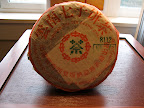
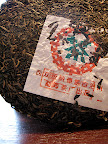
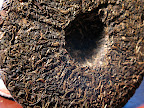
Small Puer Cake


Wednesday, October 31, 2007

J-Tea Leaf House Grand Opening!

J-Tea Leaf House Grand Opening
J-Tea’s Tea Leaf House will open on Wednesday afternoon, July 25th at 2778 Friendly Street in Eugene.

J-Tea is the source for some of the highest quality hand crafted tea available in the world. Tasting this tea is a new experience. The J-Tea Leaf House will feature award winning loose tea leaf hand crafted Oolong tea, Puer tea bricks, teapots, tea cups, tea sets, other tea related tools. Since 2004, the J-Tea brand has been sold in over 30 specialty tea shops throughout the U.S. (including at the Asian Market and Provisions in Eugene).

Tea tasters are welcome although tea will not be served by the pot or by the cup.

The J-Tea Tea Leaf House is modeled after Taiwan style tea leaf vendors. Patrons are welcome to participate in tea tastings as well as purchase loose leaf tea that can be taken home for personal brewing. Tea tastings for groups are available by request.
My thanks to everyone who came by to visit the J-Tea Leaf House on Friendly Street. I very much enjoyed meeting you and look forward to seeing you in the future.

Notes on the J-Tea Leaf House schedule
Currently I am out of town on a tea selling excursion. I will return to Eugene on September 16th and I will be open through the 19th. On the 20th I am traveling to Taiwan to get more tea. I will return on the 10th of October. The tea house will be open from October 10th until December 24th. On the 27th of December I am going back to Taiwan to but tea from the winter tea harvest.

Regular hours
J-Tea Leaf House hours on most Mondays through Fridays are from 11am to 6pm. We are also open on some Saturdays and Sundays from 1pm to 6pm (call 285-8997 for more information).

Notes on caffeine
J-Tea does not sell any herbal teas. All of the tea sold by J-Tea is a camellia sinensis. As a result, many people have been asking about caffeine. Below is a list of caffeine content in particular beverages: Espresso, 1-oz shot 40 mg
Coca-Cola, 20-oz bottle 57 mg
Red Bull energy drink, 8.3-oz can 80 mg
Brewed coffee, 12-oz cup 200 mg
Mountain Dew, 64-oz Double Big Gulp 294 mg
J-Tea type Brewed tea, 8-oz cup 50 mg


Of course, the amount of caffeine in a brewed cup of tea depends on the kind of tea, the condition of the leaves and the amount of leaves used.

Notes on brewing
Ideal water temperature –
Wen Shan Bao Zhong, Oriental Beauty and Formosa Oolong – 180-200ºF
Other oolongs – 190-200ºF
Puer and Iron Goddess – 200-212ºF

Brewing in a Mug
Tools: your favorite mug
Method: Start with one teaspoon of tea and alter. The key is to experiment and discover your individual taste.
step 1 – put one teaspoon of tea in mug
step 2 – add boiled water, allow tea leaves to unfurl
step 3 – drink tea off top, leaves will settle on bottom
step 4 – rebrew up to 3 times (brew time 3-5 minutes) or until tea is no longer at desired strength
Yield – up to 4 cups

Simplified Gong Fu Tea Brewing
Tools: small clay pot/ guy wan, small tea cups, pouring pot
Method:
step 1 – boil water, warm tea pot and cups
step 2 – use up to ¼ pot tea leaves, add boiled water and pour away first brew to rinse leaves
step 3 – add boiled water and steep 30 seconds
step 4 – repeat steep adding 5 seconds each time
**steep shouldn't exceed 1 minute

Yield – 5-10 infusions

Not so distant future
This fall I will be offering a variety of high quality and exceptionally prize winning teas. Please stop by the J-Tea Leaf House to check them out.

Best Regards,

Josh Chamberlain
J-Tea Leaf House
2778 Friendly Street
Eugene, OR
97405

To unsubscribe profile: click here

©2007 J-TEA International. All rights reserved. Last updated 9/15/07 . Questions or comments, e-mail help@jteainternational.com


Thursday, October 25, 2007

J-Tea October Newsletter

J-TEA International. October 2007

J-Tea News
The J-Tea Leaf House offers tea that I have personally selected from small independent family farms. These are farms that I have direct relationships with.

Now it’s Oolong time all the time.

I am back from Taiwan. It was a great trip! The J-Tea Leaf House offers tea tasting, over 43 varieties of Oolong tea, 7 varieties of Puer tea, and other Chinese tea including Yunnan Golden Tips, as well as a wide variety of tea ware. The tea list is always growing. Fifteen new Oolongs are on the way here from Taiwan. Also I will soon receive some great new tea brew ware and some fantastic ceramics.

Trip Highlight
I charcoal baked my first batch of Oolong! Charcoal baking is the way that Oolong tea was traditionally roasted. This tea baking process is one that is kept secret and is often mystified to confuse tea vendors and producers. If everyone knew how to improve tea with this method, those that are considered baking masters would be out of work!

The function of baking tea is to preserve its shelf life, and to bring out some of the fruity or citric flavors of a tea. Actually, the process is not all that complicated, but it does take a bit of work and some very specific equipment. Here’s how it works:

First we filled a cement drum with 80 lbs of charcoal made from the Long Yen (longan) tree. This is a fruit tree that produces fruit a little bit similar to apricots. The great thing about charcoal baking is that the flavor of wood is absorbed into the tea, thus it is very important as to which wood is used to make the charcoal. The Long Yen wood is considered some of the best to make charcoal for baking tea.

The charcoal came in large chunks so we used a hammer to break it up into small pieces. Next, we compressed the charcoal by tamping it down into the cement drum. After igniting the charcoal at the center with a blow torch (a somewhat modern intervention) we covered all of the charcoal with about 2 inches of Long Yen charcoal ash. This acts as insulation and prevents the tea from being directly exposed to an extreme heat. The thickness of this ash can be adjusted depending on the charcoal heat.
This fire burned for 5 days straight. Each batch of roasting takes anywhere from 2 to a few hours, so several batches of tea can be roasted from this one fire. Roasting time depends on the heat of the fire and the degree to which one desires the roast.

A bamboo woven rung sat above the cement drum. In the rung is a metal screen and the tea sat on this metal screen. The screen was big enough to hold about 7 pounds of tea, and the rung held the tea about 15 inches above the fire. After the tea was spread evenly on the screen a small portion of tea was scooped out from the center, so that there was no tea in the center of the screen. This was the hottest area of the fire. It is important to keep tea off the hottest part of the fire.

I was helping with the roasting process for 2 days when my teacher posed the question, "Would you like to roast a batch of tea yourself that you can take back to America?" Of course I said “Yes”. What an experience!

I selected a Mt Ah Li Mi Xiang Oolong. This is a tea that has a substantial body and a sweet aftertaste. After placing my tea on the fire, an unpleasant smell was released from the tea. This is common when the tea is first placed on the fire. The timer was set for 15 minutes. Every 15 minutes I removed the tea from the fire and stirred it through a flipping motion so that all of the surface area of the tea was evenly exposed to the fire. Again after each stirring, I scooped out the center portion of tea. After about 45 minutes the tea released an incredibly fragrant smell. Toward to end of the baking process, time between stirring was reduced. After 2 hours and 30 minutes, the tea smelled excellent. I took some of the tea and brewed it and decided to let it bake a bit longer. Then after a little while I tasted the tea again, I decided it was ready, and I removed it from the fire and placed it in a bag.

Days later I tasted the tea again and it had a different even smoother woody flavor that had slowly developed in the tea. When my tea teachers tasted the tea, they both nodded their approval. It was a success!


J-Tea Leaf House Hours
The Teashop is open everyday except Friday and Saturday. Hours are from 11AM to 6PM

J-Tea Leaf House Location
We are located at 2778 Friendly St., across the street from the Friendly Street Market.

Come by to see our new selection of tea and tea ware.

©2007 J-TEA International. All rights reserved. Last updated 10/14/07 . Questions or comments, e-mail help@jteainternational.com

Wednesday, October 04, 2006

Gui Fei Mei Ren Oolong 貴妃烏龍茶

This tea is from Nantou County, Lugu Township. In 1999, following the devestating earthquake in this area, many of the tea farmers in the area used an excessive amount of nitrogenous fertilizer which in turn attracted many of the aphid type leaf hoppers. The Flavor of this tea depends on the transfer of pollen from nearby flowers to the tea leaves, giving the tea its unusually sweet flavor. My favorite varietal of Gui Fei Mei Ren is made Qing Xing Oolong, but it can also be made with Jin Xuan Oolong and possibly other variatals as well.
Gui Fei Mei Ren is named after one of China's four famous beauties, Yang Gui Fei. She represents a sexy juicy version of beauty due to her plump nature. Gui Fei is a title given to a kings wife that is his favorite wife just after the queen, indicating a second tier wife position. Yang Gui Fei lived in the Tang dynasty and was the wife of Tang Ming Huang. There are many stories about Gui Fei. I will convey the ones that I know. It is said that she bathed in milk. She was one of the king's favorite wives. Her favorite fruit was Li Zhi (I am not sure of the English name), a fruit that grows in the south of China. Gui Fei lived in central China. The king assigned the fastest horse to transport his beloved wives favorite fruit so that it would not spoil before it arrived. Eventually she brought great turmoil to the kingdom as her jealous boyfriend, An Lu Shan, took it upon himself to kill the king, although he never did. Another name for this tea is "Noble Concubine".

Shan Lin Xi Oolong Tea 杉林溪茶

Shan Lin Xi Oolong Tea 杉林溪茶
Both of these Shan Lin Xi Oolongs were hand picked and hand crafted, in the Shan Lin Xi mountain range. Shan Lin Xi is in Zhushan township of Nantou county. Oolong tea has been grown in Shan Lin Xi for the past 50 years, but it was only since 1981 that the area's oolong tea production increased to meet an ever growing national demand. All of the tea grown in this area is "Qing Xing" Oolong, the most sought after varietal for high mountain oolong. These High Mountain Oolong Teas were grown at about 5,900 feet (1800 meters). The quality of the tea cannot be graded on the altitude alone. Other factors such as tea type, area of growth, production and crafts person's skill all contribute to these tea's amazing substance and aroma.
These Shan Lin Xi Oolongs were produced by a small family farm. This farm is the home of a master tea craftsman who has produced "special winning" Oolong in the past. The area is a beautiful array of cedar forests and running brooks in the area that enhance the environment for tea production. The temperate climate is cool. The sun shows for only a very brief time throughout the day. Fog coats the hills and fields of tea the rest of the time. These conditions ensure that the tea will grow slowly, struggling for life, and eventually produce a heartier plant with leaves that are robust, thick, and soft, which inevitably results in a more elevated tea experience.
In Taiwan, Taiwanese oolong is almost always made in a small gong fu tea pot or a guy wan. This is especially true when brewing a tea of considerable value such as these Shan Lin Xi Oolongs. Suggested water temp is around 194 degrees Fahrenheit. Tea should fill the kung fu tea device to 1/3 full of tea for a strong brew of tea and 1/4th full for a moderate strength. Brew the tea for 45 seconds and pour out for drinking. Repeat for eight to ten infusions.
Recommended brew device: White Guy wan or an unglazed clay teapot fired at extremely high temperature so that the clay can sustain a very thin wall.

Mu Za Tie Guan Yin 木柵鐵觀音茶

Mu Za Tie Guan Yin 木柵鐵觀音茶
Provence: Taipei
Taipei City, Mu Za Area

AKA Iron Goddess
The Mu Za tea plantations are from the time of the Japanese occupation of Taiwan. The beginning of Tie Guan Yin in Taiwan was when two brothers were sent by the Mu Za Tea Company to China to bring back a Tie Guan Yin (TGY) plant. The brothers made the journey to An Xi County in Fu Jian Provence where they were able to aquire to correct strain of Iron Goddess. The conditions in Mu Za area were ideal for this kind of tea so the transfer was very successful. The Mu Za area grows Tie Guan Yin tea exclusively and it is known as "Zheng Chong Tie Guan Yin" 正欉鐵觀音" The difference between this kind of Tie Guan Yin and other TGY's is the tea plant's ecology. This kind of TGY also grows out a bit more to the sides, the leaf surface is wrinkled, and the pith of the leaf does not run directly down the middle of the leaf. Thus, the tea leaf that comes from Mu Za Area has a naturally curved shape as it grows on the tea plant. It is often compared with a piece of fruit. The leaf teeth are of all different sizes. In these ways, this Zhen Chong TGY is completely different from any other kind of TGY. Zhen Chong TGY is much dryer than other TGY and the width of the plant is wider and fatter. Zhen Chong TGY has a stronger flavor with a darker color as well as a stronger scent when compared with other TGY.
The altitude of the Mu Za growing area is 300-350 meters (984-1148 feet). The tea there can be harvested between 4 and 5 times a year, although the spring and winter harvests are the best. It has east and west exposure, resulting in long days in the sun. Therefor, the tea when harvested has a tendancy to be very bitter, but after a period of oxidation, and a baking process, the bitter flavor dissipates, the tea's alkali changes during the baking process, so that the end result is a tea that is good for older people, or those with delicate stomachs.
The amount of tea when brewing should be one third of a gung fu tea pot or less. The temp should be around 203 degrees and the infusion time should be quick from 20 to 30 seconds. If the tea amount is less, one should extend the brew time. From the second to the fifth brew the temp should be from 176 to 194, and the brew time should be from 10-20 seconds.
Oriental Beauty also known as Bai Hao Oolong 白毫烏龍茶 also known as Dong Fang Mei Ren 東方美人茶
The name Oriental Beauty is said to come from Queen Elizabeth I of England who reportedly remarked, "What an oriental beauty?" upon first tasting the tea. This is a summer harvest tea that relays on a tea leaf eating aphid that transfers pollen from nearby flowers to the tea leaves, resulting in the classic Oriental Beauty honey taste. This is a heavily oxidized tea leaf that results in a reddish liquor that is especially sweet and intoxicating. In Southern Taiwan, where I lived in Taiwan, most if not all of the rain would happen in the summer. The summer rains were part of the course when a typhoon that was passing through the area. I always welcomed the typhoon's ability to cool the area considerably, but later I learned that typhoons can wreak havoc on the tea growing mountains as landslides cover plantations and viliages under their massive rubble. The tea fields are in part to blame but often more heavily criticized are the bing lang plantations that cover vast hillsides, providing only the most shallow of roots. It was on these rainy days that I loved drinking Dong Fang Mei Ren. Production of this tea is in Xin Zhu County's Bei Pu.
Dong Ding Oolong Tea 凍頂烏龍茶
It was in 1855 that tea from Mainland China was planted on Dong Ding Mountain. This is a very famous Oolong tea from Taiwan. The name "Dong Ding" or Frozen Tip/Frozen Summit is a play on words because the old stories of picking tea on this mountain tell of numb fingertips and tips of toes that went along with harvesting the tea in this area. The mountain is located in Lugu "Deer Valley" Township which is in Nantou County. Traditionally, this tea will be oxidized about 30%, it is then baked over a high temperature for a long period of time. This baking adds to the rich texture and aroma of this tea.